
Skąpiec feed for Shopify
Skąpiec.pl is Poland's veteran price comparison site, run by Ringier Axel Springer Polska and configured entirely in the self-service Onet Ads panel. Its robot crawls a hosted feed URL, the exact model Feedflock serves: your Shopify catalog rendered in the published XML vocabulary, on a stable, unguessable URL, refreshed every hour.
Setup
Live in five steps
From a bare Shopify store to a listed offer: the whole setup fits into one coffee break.
Register in the Onet Ads panel
Skąpiec is bought and configured in Ringier Axel Springer's Onet Ads panel (panel.onetads.pl). Log in with an O!Konto, register your company (NIP and address; verification usually takes up to 2 working days), then add the Skąpiec.pl service.
Install Feedflock
Add Feedflock from the Shopify App Store. It reads your products, variants, stock and images directly through the Shopify API.
Pick the Skąpiec template
Create a new feed from the Skąpiec template. compid, catpath, photo, url, vendor, name and price are mapped from the start, with one item per variant and the name built from the product and variant titles.
Fill the matching keys
Every offer needs at least one of partnr (manufacturer code) or EAN. The template fills them from the variant SKU and barcode. Make sure each product also has a category path: exactly one per product is an integration condition.
Paste the feed URL into the panel
Register the hosted feed URL under Ustawienia witryny → Feed produktowy. RASP's robot crawls it to add new offers and update prices. Skąpiec itself recommends an unguessable URL over a password, which is exactly what Feedflock hosts.
https://feedflock.appfleece.com/f/demo-skapiec/skapiec.xml
Catch feed issues before Skąpiec does.
Before every generation Feedflock checks that every field the channel requires is filled, and, on templates verified against the channel's own spec, that the values fit its rules. Most problems are fixed with one click, without editing products in Shopify.
The feed
What the channel receives
<item>
  <compid>9087654322</compid>
  <catpath>Odzież / Koszule męskie</catpath>
  <photo>https://cdn.shop.example/img/linen-shirt-sand.jpg</photo>
  <photo>https://cdn.shop.example/img/linen-shirt-sand-back.jpg</photo>
  <url>https://shop.example/products/linen-shirt-sand?variant=9087654322</url>
  <vendor>Nordlin</vendor>
  <name><![CDATA[Linen shirt Sand M]]></name>
  <price>219.00</price>
  <partnr>SKU-2048</partnr>
  <desclong><![CDATA[A breathable linen shirt in a regular cut.]]></desclong>
  <ean>5901234123457</ean>
</item>
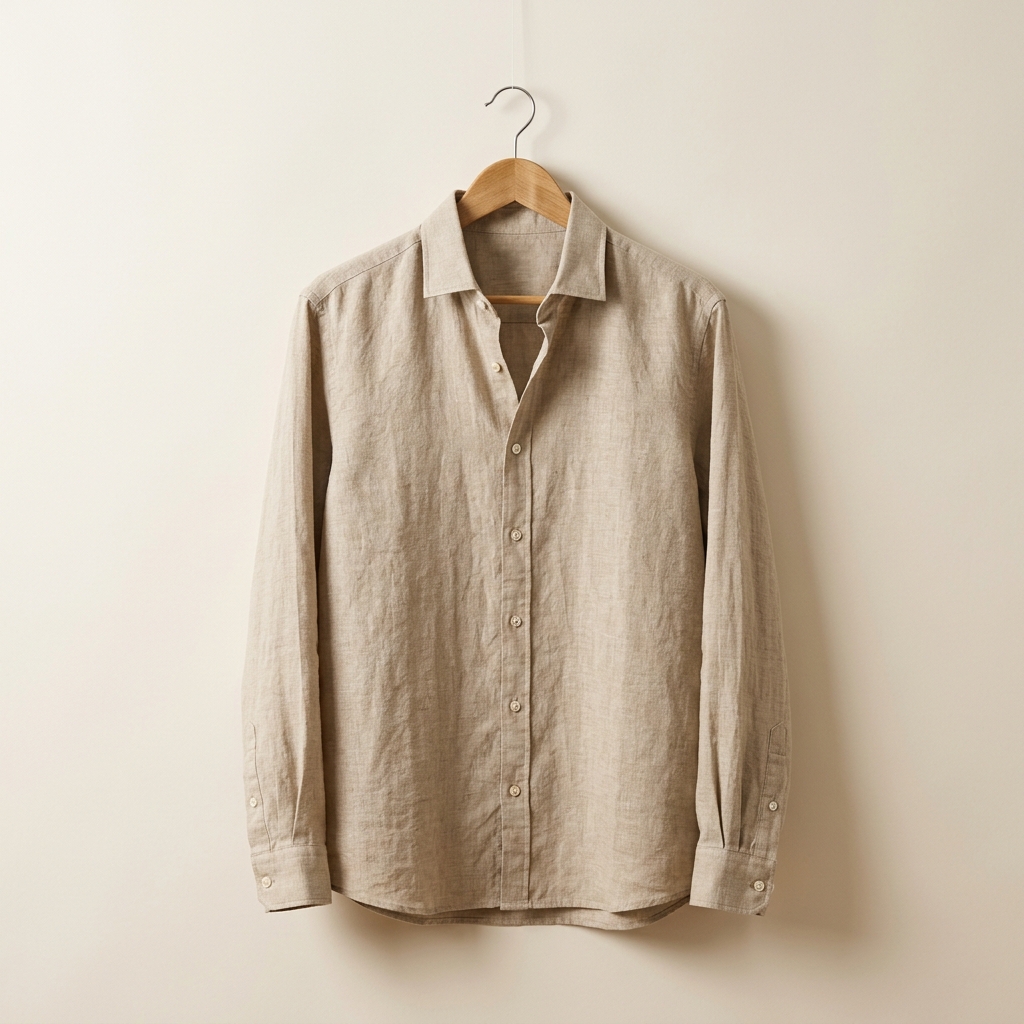
Nordlin
Linen shirt Sand
219 zł
Feed fields
compid
9087654322
catpath
Odzież / Koszule męskie
photo
https://cdn.shop.example/img/linen-shirt-sand.jpg
photo
https://cdn.shop.example/img/linen-shirt-sand-back.jpg
url
https://shop.example/products/linen-shirt-sand?variant=9087654322
vendor
Nordlin
name
Linen shirt Sand M
price
219.00
partnr
SKU-2048
desclong
A breathable linen shirt in a regular cut.
ean
5901234123457
The channel
Poland's veteran comparison site
Skąpiec.pl has compared prices since 2004 and belongs to Ringier Axel Springer Polska. Your offers sit next to the whole market on a product card, compared on price.
Self-service from start to finish
No contracts and no account manager: an O!Konto, company verification in about two working days, add the Skąpiec service and paste the feed URL. One panel also runs Lamoda.pl, Opineo.pl and the rest of RASP's commerce services.
Costs you can cap
Billing is per click at a per-category CPC rate, with a monthly redirect limit. Reaching the limit simply stops your offers being shown, so the spend can never run away; the current limit is self-service.
The feed
- A template written against the operator's own published specification: the <xmldata> / <version>13.0</version> / <data> frame and exactly its element names, with name and description in CDATA the way the sample shows
- One item per variant, each with the Shopify variant ID as a stable compid (max 200 characters, per the spec) and a URL that deep-links to that variant
- The name defaults to product title + variant title, because the vocabulary has no attribute element: colour and size can only live in the name
- The matching keys come filled from the start: partnr from the variant SKU and EAN from the barcode, at least one per offer, as the spec's footnote demands
- The price goes out gross, as a bare number with a dot decimal and no currency element, matching what your shop page shows
- The readiness check lists offers missing a required element or both matching keys before you hand the URL to the panel
- availability stays out of the feed on purpose. The spec's sample shows 24 but never defines the element, so we emit nothing rather than something wrong
Deep dive
A hosted URL the robot crawls
- Skąpiec reads one
XMLfile from a fixedURLand asks that the address never changes - Password protection is discouraged: a long unguessable
URLis the recommended shape - Do not restrict access by IP: the crawler's addresses change (
AS12990, five documented User-Agents) - Images are fetched too, by a separate worker
Technical details
Skąpiec's technical requirements describe exactly the model Feedflock serves: one XML file at a permanent URL, fetched by the service's robot to add new offers and update prices. Password protection is explicitly discouraged in favour of a hard-to-guess address, which is what a Feedflock feed URL already is.
Two hosting rules follow. Do not limit access to specific IP addresses, because the crawler's addresses change; and do not block its agents, five of which RASP documents by name, including one that literally says Skapiec. Images are fetched separately by an image worker, so your CDN links must be reachable too.
A small vocabulary, exactly as published
- The frame is <xmldata> with <version>13.0</version> and one <item> per offer inside <data>
- Eleven elements in total: compid, catpath, photo, url, vendor, name, price, partnr, desclong, availability, ean
- photo is the only repeatable element: the gallery renders as sibling <photo> children
- No attribute element exists: colour and size have nowhere to go except the name
Technical details
The specification RASP publishes is short and complete: eleven elements inside an <xmldata> frame stamped <version>13.0</version>. The name and the long description are CDATA in the sample; everything else is plain escaped text. compid is the unique offer identifier, 200 characters at most, the only length the document states.
There is no attribute or parameter element at all, so colour, size and material can only ride inside the name. That is why the template's default name is the product title plus the variant title: with one item per variant, the name is the only place that can tell them apart.
Pairing: one of two keys must be there
- partnr (manufacturer code) and ean carry the footnote: at least one must be filled
- vendor and name do the rest of the matching work
- catpath is your shop's own category path, levels separated by "/". Skąpiec publishes no tree
- Every product must belong to exactly one category
Technical details
The spec's only hard pairing rule sits in a footnote on two elements: every offer must carry at least one of partnr, the manufacturer's product code, or an EAN. The template maps both from the start (the SKU and the barcode), so a fully maintained Shopify catalog satisfies it without extra work.
The category is your shop's own hierarchy with levels separated by slashes; Skąpiec publishes no category tree for feeds and sends no ids. By default the path comes from your product type, and the integration conditions require exactly one category per product.
What the feed does not carry
- No delivery data of any kind: no carrier, no shipping price, not even a weight
- No promotional price element, no stock count, no colour or size fields
- availability appears in the spec's sample (24) but its own tag list never defines it
- The free-shipping badge is driven by phrases in the offer name, set up in the panel
Technical details
Skąpiec's vocabulary has no delivery element at all: no carrier list, no shipping price, no cash on delivery, not even a weight to estimate from. The one cosmetic exception is the Darmowa wysyłka badge, granted to offers whose name contains a phrase like "Dostawa 0 zł" when the badge's scope is set to the XML file in the panel.
The strangest gap is availability: the sample file carries <availability>24</availability>, yet it is the one element the tag definitions skip: no values, no unit, no stated meaning. Rather than guess, the template ships it unmapped; your Onet Ads contact (bok@skapiec.pl) can confirm the accepted values before you fill it.
The takeaway
One URL the robot already knows how to crawl, an XML file that follows the published spec element for element, and matching keys filled from the start. Your Shopify catalog stays the single source of truth, and Skąpiec always reads a feed that mirrors it.
Claude · ChatGPT
Or set up your Skąpiec feed in chat
Connect Feedflock to Claude or ChatGPT and ask. It creates the feed as a draft, maps your categories to Skąpiec's own tree and tells you what is still missing. You approve every change.

 feedflock · mcp
Create a Skąpiec feed for my store and map my categories.
I'll create it as a draft and show you each change before I make it.
FAQ


Get on every marketplace that matters this afternoon.
Install free, connect your first feed in minutes, and let Feedflock keep it fresh and validated.